|
|
Posted By IIAW Staff,
Wednesday, December 23, 2020
|

Happy Holidays! We hope everyone has a safe and happy holidays with their loved ones. On this week's Big I Buzz we are discussing where those late holiday packages may be hiding, what you can do to help small businesses become cyber safe and where the
COVID-19 relief bill sits today.
Bipartisan COVID-19 Relief and Government Funding Deal Struck
On December 20th, Congress poised to pass a roughly $900 billion COVID Relief Package. The package would allow direct payments of $600 for most Americans. The relief package included a $1.4 trillion to fund government agencies through September and contains
other end-of-session priorities such as money for transit systems, an increase in food stamp benefits and about $4 billion to help other nations provide a COVID-19 vaccine for their people. The COVID-19 relief package includes a number of consequential
legislative victories for Big "I" members and their clients. The package includes roughly $325 billion in small business relief, including an additional $284 billion for the Paycheck Protection Program (PPP) which is reauthorized through the end of
March 2021.
Late Tuesday night, President Donald Trump called on lawmakers to increase direct payments for most Americans from $600 to $2,000 for individuals and $4,000 for couples.The original relief bill contained a two-year tax break for corporate meal expenses,
which President Trump stated was not enough to help struggling restaurants. According to Fox 59, "The White House did not signal any objections to the legislation before it passed, and gave every expectation that Trump would sign it. Treasury Secretary
Steven Mnuchin was involved in the negotiations over the bill." At the time of writing this, White House officials did not immediately respond to a request for comment on Trump's intentions. Read more here. You can also stay up-to-date on changes to this and other COVID-19-related news on the IIAW's COVID-19 Resource Center.
Holiday Packages Held Up in Transit at Wisconsin Sorting Center
Many holiday shoppers have turned online to find the perfect gifts for their family and friends. But, shipping delays may be keeping many of those packages from arriving on time. According to Satish Jindel, president of Ship Matrix, an estimated 2.2 million
packages are falling behind each day. Most of those packages are delayed by just one day, but some are showing up as many as six days late. If you're in the same boat as many Americans, waiting for your gifts to arrive, try getting creative. You can
print out a photo of the item and sticking it in a card under the tree or you can come up with a riddle or small scavenger hunt to help clue in the recipient to what's in store. Gift for a kid running late? Tell them that their gift fell off Santa's
sleigh, but that an elf or reindeer will be by later to drop it off. Today, December 23rd is the last day for shipping, should you choose to ship USPS Priority Mail Express Service.
Do Your Part to Help Small Businesses Become Cyber Safe
In a recent survey, 64% of small businesses have reported not having cyber insurance coverage. According to Insurance Business, "As agents and brokers become more aware that cyber is a high-priority issue for their customers, they should work with their
insurance markets to get up to speed on what the latest coverages are and the benefits of them. One benefit is the fact that most cyber insurance providers include robust education and training resources with the insurance. You can see more information
about how and why small business are seeing an uptick in cyberattacks, and what can be done to combat the rising threat here with
CyberScout's free whitepaper, "Small Business, Huge Risks".
Big I Buzz will return after the holidays on January 6th, 2021. For more news, check out the Action News section of our weekly e-newsletter
Big I Buzz.
If you aren't subscribed, click
here
to add your email to our emailing list. We hope that everyone has a great rest of their week! \
Happy Holidays!
Tags:
big i buzz
insuring Wisconsin
wisconsin independent insurance association
wisconsin insurance agency help
wisconsin insurance blog
Permalink
| Comments (0)
|
|
|
Posted By IIAW Staff,
Wednesday, December 16, 2020
|
Happy Wednesday! We are closing in on the holidays and that means it's time to finish up that last-minute shopping. In this week's Big I Buzz, we are covering a great platform to help you shop local Wisconsin businesses. In industry news, we are discussing
the IoT Cybersecurity Improvement Act that President Trump signed into law this month and a new NAIC rule that would allow rebating.
The 'Amazon' of Wisconsin mom & pop shops: Website allows users to search for, shop at 400+ small businesses
We are 9 days away from Christmas and what better way to finish off your shopping than by shopping small and local. MainStreetWi.com is a hub for more than 400 Wisconsin-based, independent businesses: selling everything from fine art and furniture to
clothes, books and games. Shoppers using the site can narrow their searches using the toolbar on the side, and even allowing you search for stores geographically using the drop-down bar on the left side of the screen. Most business are offering both
delivery and curbside pickup options, helping you to get your gifts on time. Learn more here.
Trump Signs IoT Cybersecurity Improvement Act into Law
On December 4 2020, President Trump signed into law the bipartisan-backed Internet of Things Cybersecurity Improvement Act of 2020. This law applies solely to federal government agencies, but its downstream consequences are likely to recah further, impacting
devices procured by the federal government and - likely, eventually - consumer devices.
Internet of Things (IoT) devices are in widespread use, most visibly by consumers of new smart home devices. According to the new law, these devices: 1.) interact with the physical world. 2.) Have a network interface for transmitting or receiving information
via the internet and 3.) Are not conventional information technology devices such as smartphones or laptops and cannot function as a component of another device such as a processor. Because these devices are generally viewed as being more vunerable
to cyberattacks, the IoT Cybersecurity Act seeks to reduce those risks. To do so, the new law:
1. Tasks the National Institute of Standards and Technology (NIST) with developing, publishing and updating security standards for IoT devices.
2. Requires the Office of Management and Budget (OMB) to review each federal agency's information security policies to ensure they comply with the standards NIST promulgates for IoT devices and;
3. Prohibits federal agencies from procuring any devices that fail to comply with NIST's standards.
Learn more about the new act here.
New NAIC Rule Would Allow Rebating
According to Insurance News Net, "The Executive Committee of National Association of Insurance Commissioners adopted language today designed to allow for 'rebates' to be offered to consumers. The committee unanimously adopted an amendment to the NAIC
Unfair Trade Practices Act. Adopted language will permit insurers or producers to "offer or give non-cash gifts, items or services, including meals to or charitable donations on behalf of a customer in connection with marketing, sale, purchase or
retention of contracts of insurance." Each state commissioner will decide the possibility of a cap on gift amounts. Learn more about the new NAIC rule here.
For more news, check out the Action News section of our weekly e-newsletter
Big I Buzz.
If you aren't subscribed, click
here
to add your email to our emailing list. We hope that everyone has a great rest of their week!
Tags:
Big I Buzz
insuring Wisconsin
wisconsin independent insurance association
wisconsin insurance agency help
wisconsin insurance blog
Permalink
| Comments (0)
|
|
|
Posted By IIAW Staff,
Tuesday, December 8, 2020
|
Happy Wednesday! Christmas is only 16 days away - time to get that last-minute holiday shopping done. On this week's Big I Buzz, we are discussing the IRS announcement about retirement plan contributions, when to expect the first batch of COVID-19 vaccines
in Wisconsin and a few ways how auto insurers can exceed customer expectations post-sale.
IRS Announces 2021 Retirement Plan Contribution Limits for 401(k)s and More
The Treasury Department has announced inflation-adjusted figures for retirement account savings for 2021. According to Forbes, "The basic salary deferral amount for 401(k) and similar workplace plans remains flat at $19,500; the $6,500 catch-up amount
if you're 50 or older also remains the same; but the overall limit for these plans goes up from $57,000 to $58,000 in 2021. That helps workers whose employers allow special after-tax salary deferrals, and self-employed folks who can save to the limit
in solo or individual 401(k)s or SEP retirement plans. Learn more here.
Wisconsin Expects First Batch of COVID-19 Vaccines Soon, General Public May Not See it Until Mid-2021
Wisconsin health officials say the state could receive its first batch of almost 50,000 doses of COVID-19 vaccine yet this month, but cautioned that it may not be until next summer before the general public can begin to receive vaccinations. According
to the Wisconsin State Journal, "During a media call Monday with reporters, Julie Williams Van Dijk, deputy secretary with the state Department of Health Services, said the state expects to receive the first round of Pfizer's vaccine - 49,725 doses
have been allocated - in the coming weeks, once the U.S. Food and Drug Administration grants emergency approval. First priority would be given to Wisconsin's roughly 450,000 health care workers and long-term care facility workers. Next up the vaccines
would be given to other population groups that could include essential workers or those with at-risk conditions before the general public will be able to be immunized. Learn more here.
Three Ways Auto Insurers Can Exceed Customer Expectations After the Sale
A recent study from MDgo found that the price of auto insurance policies is what motivated a majority of consumers int heir purchasing decisions, with 52% of consumers choosing cost as the major driver when purchasing auto coverage. Auto insurers are
challenged to focus on their on-going customer experience and the quality of their touchpoints after the quote to improve customer retention. According to NU Property Casualty 360 insurers can exceed customer expectations post-quote by,
1. Be there to support policyholders when they need it most - consider how you can offer policyholders a sense of security and support in their purchasing decision
2. Show that data privacy matters - show how consumers data is being used. Property Casualty suggests, "to gain access to the detailed accident data that powers personalized customer engagement and experiences, auto insurers should not only focus on collecting
user-based data on an on-going basis, but also offer to only collect data at the moment of an accident, when it's needed the most."
3. Acknowledge customer expectations in real-time - Auto insurers can leverage their knowledge to provide policyholders with a tailored response to their immediate needs, be it a reference to a nearby repair shop that specializes in certain kinds of damages
or a recommendation to immediately visit the hospital based on the severity of injuries, said Property Casualty 360.
By going above and beyond the quote, auto insurers can go above and beyond the quality of their customer touch points and personalized experience overall. Read more here.
For more news, check out the Action News section of our weekly e-newsletter
Big I Buzz.
If you aren't subscribed, click
here
to add your email to our emailing list. We hope that everyone has a great rest of their week!
Tags:
big i buzz
insuring Wisconsin
wisconsin independent insurance association
wisconsin insurance agency help
wisconsin insurance blog
Permalink
| Comments (0)
|
|
|
Posted By IIAW Staff,
Monday, December 7, 2020
|

By: Kaylyn Zielinski | IIAW Marketing & Communications Coordinator
As we enter the 2020 holiday season, it’s not a surprise that the holidays are feeling very different this year. Holiday parties are being put on hold and end-of-year networking events are being postponed. However, we are gifting you with a solution to
allow for much-needed networking in the time of social distancing! You no longer need to sift through the posts on LinkedIn to find content and connections that matter to you - that’s what our Online Community is for: a curated platform for insurance
professionals. This holiday season, we’re gifting you with a place for connection, in a time when in-person gatherings are non-existent.
At the time of writing this article, we have already amassed over 120 members (and growing every day) who are engaged in our Online Community! That’s over 120 people who are ready to connect, collaborate and engage with you!
"
I really like the concept of the Online Community. One of the benefits of being involved in the Big I in general is the opportunity to interact and get to know other agents from across the state. The Online Community is a great new part of that, especially
in light of the fact that we can’t get together in-person like we normally would. It gives us the chance to ask questions of our fellow agents and share experiences or advice, all in the interest of making us better as agents and as an industry.
And it’s
so easy to use, even I can do it."
- Steve Leitch, Leitch Insurance Agency, Inc.
Our Online Community is for every single one of our members, whether that be independent agents, carriers, vendors, companies, etc.
As we’ve mentioned in previous publications, our Online Community is two-fold. Not only are we offering a free and fun platform to exclusively network, but we’re also supporting our local communities through this outlet as well.
We just celebrated Small Business Saturday on November 28th, 2020, and we can proudly say that the IIAW and our Online Community participants truly played a part in supporting local Wisconsin businesses!
The IIAW awarded Thought Leaders (previously known as committee members) who signed up for our Online Community. Each Thought Leader received a $25 gift card to a local business of their choice.
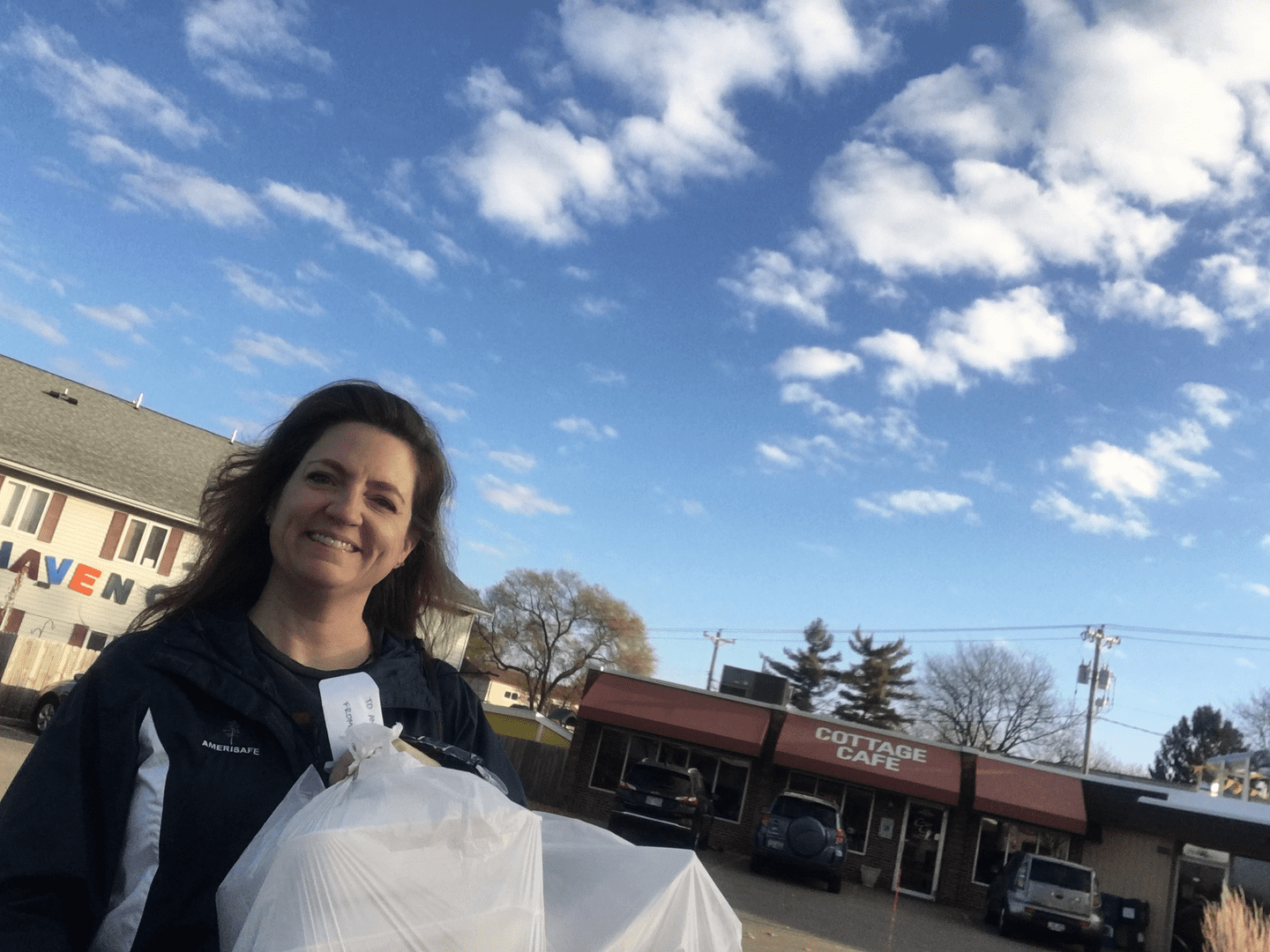
Amy Brice, AMERISAFE, used her gift card at Cottage Cafe in Madison

Ryan Waite used his gift card at Forage Kitchen in Madison

Jeff Thiel, R&R Insurance Services, used his gift card at Weissgerber Golden Mast Inn in Okauchee
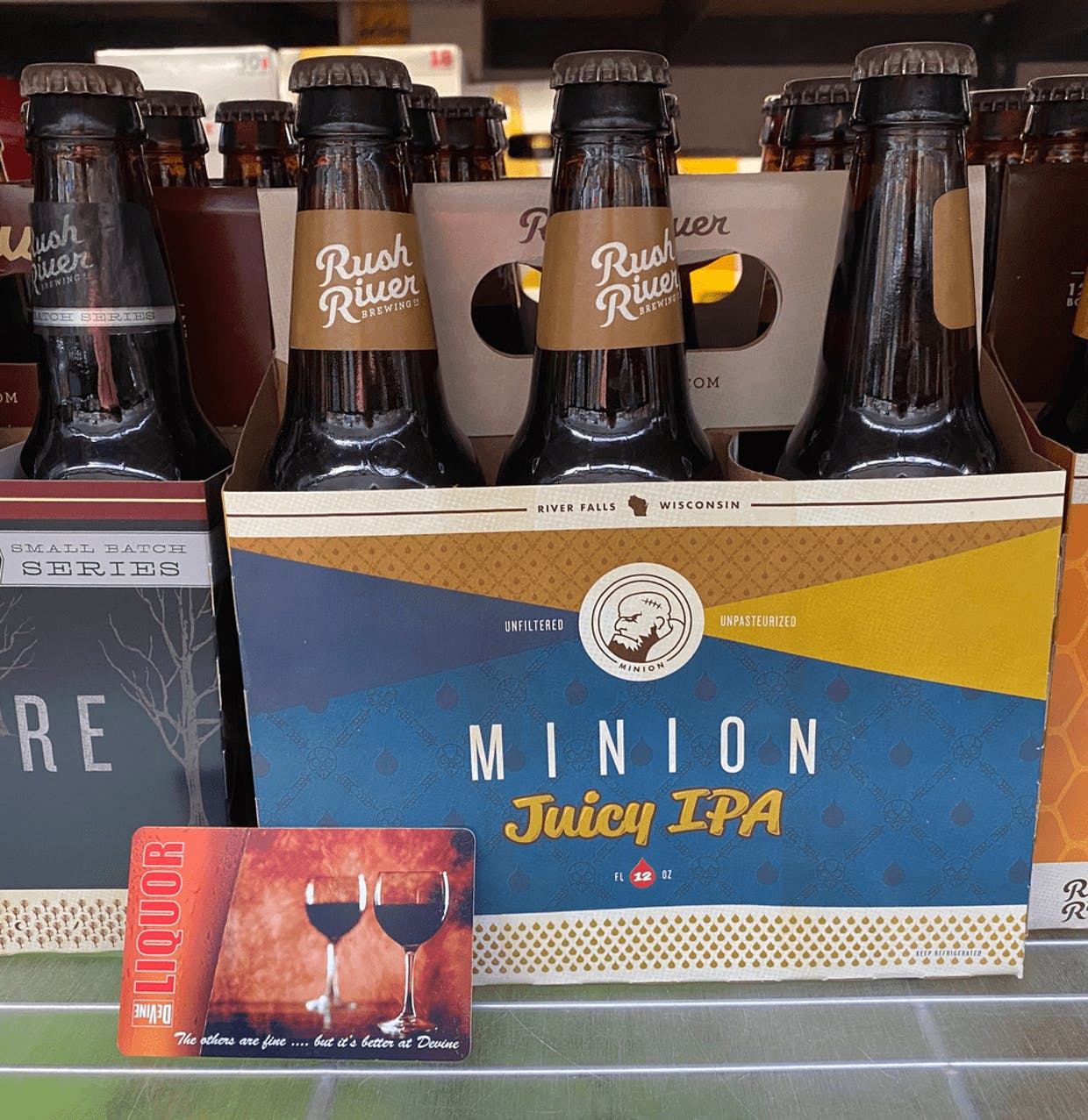
Steve Leitch, Leitch Insurance Services, Inc., used his gift card at DeVine Liquor in River Falls
We’ve awarded our Thought Leaders (members registered to be a verified resource for questions and content within each of the Online Community Groups) a gift card for a local Wisconsin business of their choice.
Every person who participates in our Online Community can earn rewards. Each time you engage within the Community, you earn points. Then, at the end of each quarter, if you’ve reached certain point thresholds, you’ll receive some awesome rewards.
These rewards are: a $25 gift card to a local Wisconsin business of your choice, a $100 donation to a Wisconsin non-profit of your choice and an IIAW swag bag which contains items like Yetis, desktop whiteboards, smart plugs and more!
To join the IIAW’s Online Community, go to iiaw.com/joincommunity. Be sure to check your spam/junk folders for the invite email after filling out the survey on our website. We are looking forward to connecting with all of you in our Online
Community! Happy Holidays!
Tags:
insuring Wisconsin
online community
wisconsin independent insurance association
wisconsin insurance agency help
wisconsin insurance blog
Permalink
| Comments (0)
|
|
|
Posted By IIAW Staff,
Tuesday, November 24, 2020
|
We hope everyone has a happy and safe Thanksgiving! On this week's Big I Buzz, we're discussing the upcoming SBA Office of Advocacy's Small Business Virtual Tax Roundtable, the latest update to Wisconsin's COVID-19 restrictions and the IIAW's upcoming Agency Leadership Webinar.
First, before we jump into this week's news, we'd like to remind everyone that our office will be closed on Thursday, November 26th and Friday, November 27th. We will resume normal business hours on Monday, November 30th.
SBA Office of Advocacy's Small Business Virtual Tax Roundtable
On Friday, December 4th, you can join the SBA Office of Advocacy as they discuss federal and state tax issues surrounding PPP Loans. From 10 a.m. to 11:40 a.m., you'll hear from Tom West, Principal, Passthroughs Group KPMG; Jared Walczak, Vice President of State Projects with the Center for State Tax Policy at the Tax Foundation and; Charles Jeane, Assistant Chief Counsel at the SBA Office of Advocacy. You can learn more about the Roundtable here.
Wisconsin Gov. Evers Extends Public Health Emergency, Mask Mandate
On Friday, November 20th, Wisconsin Governor, Tony Evers officially extended the state's public health emergency and mask mandate. Originally, the mask mandate was set to expire on Saturday, November 21st. Gov. Evers' new order now extends the mask mandate and the public health emergency by 60 days. Learn more here.
Agency Leadership Webinar Series: E&O Claim Trends
Join us on Friday, December 4th at 10 a.m. for our next Agency Leadership Series webinar! Donna Asta, Vice President and Claims Expert at Swiss Re Corporate Solutions will discuss many COVID-related topics, including what types of cases the courts are seeing from an E&O perspective, claims that are being made and when to report a claim to the E&O carrier. If you plan to attend the Small Business Virtual Tax Rountable on Friday at the same time, don't worry! If you register for our webinar series ahead of time, you will receive a recording of the webinar after it has ended. Click here to register.
For more news, check out the Action News section of our weekly e-newsletter
Big I Buzz.
If you aren't subscribed, click
here
to add your email to our emailing list. We hope that everyone has a great rest of their week and a very happy Thanksgiving!
Tags:
Big I Buzz
insuring Wisconsin
wisconsin independent insurance association
wisconsin insurance agency help
wisconsin insurance blog
Permalink
| Comments (0)
|
|
|
Posted By IIAW Staff,
Wednesday, November 18, 2020
|
Happy Wednesday! On this week's Big I Buzz, we are discussing what Black Friday 2020 will look like, what employers should know about Gov. Evers' Executive Order #94 and a few steps to help reduce pandemic fatigue. What Evers' Executive Order #94 Really Means for Employers Executive Order #94 calls for unity and working together in an advisory capacity. As an employer, this means that there will be no mandates. Instead, it encourages employers to follow a list of suggestion to help stop the spread of COVID-19 to their employees, customers and communities. Second, there will be no government penalties or enforcement provision. Instead, employers should be prepared to address concerns from employees, clients and customers. Finally, some health departments are making statements based on the new order to address county- or city-wide requirements issued by authorities. Employers should be ready to answer questions regarding the suggestions outlined in Order #94. Great steps to take would be to consult local health departments to determine if there are any updates in response to the order, review and update business COVID-19 response plan and protocols to incorporate updated guidance and prepare talking points to explain the employer's response to Order #94, accordingt o Godfrey & Kahn. What will Black Friday Look Like in 2020? 2020 has brought many changes with the COVID-19 pandemic, and the holidays are no different. According to Property Casualty 360, shoppers are shying away from Black Friday. A recent Accenture Holiday Shopping Survey shows that shoppers are minimizing in-store shopping and choosing home delivery. According to the survey, 76% of consumers want retailers to remain closed on Thanksgiving Day, and have of those respondents said retail workers deserved a day off. In addition to offering in-home delivery (free and fast) and curbside pickup, Accenture recommends retailers consider appointment-based shopping. Read more about the Accenture survey and how Black Friday may be different in 2020 here. 7 Steps to Reduce Pandemic Fatigue The stresses of COVID-19 can cause pandemic fatigue with fears of infection, actual infection, isolation in quarantine and social distance, job losses and more sit at the front of your mind. A clear sign of pandemic fatigue is a sense of inner weariness. You could also feel fear, anxiety, loneliness and hopelessness. UCLA Health recommends seven steps to take to reduce pandemic fatigue: 1. Create new traditions - While many activities you may normally enjoy may not be a possibility any more, instead find a new hobby to bring you joy. Some stay-at-home options: pick up a new craft or new book series to focus on. 2. Try positive self-talk - ignore the "what-if" thoughts regarding the pandemic, and instead, think about the positives of what you're doing to stay safe. 3. Accept your feelings - Allow yourself to acknowledge and name your feelings instead of pushing them away. Then, refocus your mind and energy on things you can do to feel better. 4. Connect with others - Being alone and feeling isolated can be stressful. It's important to connect with others outside of your household. Great options to do so would be making phone calls, arrange video meetings, take a live class online and join IIAW's Online Community where you can connect with other industry professionals. Join the Online Community here: iiaw.com/joincommunity. 5. Lower your stress - focus on activities that are calming and bring you joy such as any stress-relieving activity like going for a nature walk, yoga or watching a comedy. 6. Limit your news intake - while it's important to stay up-to-date on current news and COVID-19 updates, consuming too much news can overload you and zap your energy. Consider taking a break from the news for a day or two. 7. Take care of your body - Make sure you're getting enough sleep, maintaining a nutritious diet and exercising. Doing these will boost your energy, lift your mood and strengthen your immune system. Learn more here. For more news, check out the Action News section of our weekly e-newsletter Big I Buzz. If you aren't subscribed, click here to add your email to our emailing list. We hope that everyone has a great rest of their week!
Tags:
Big I Buzz
insuring Wisconsin
wisconsin independent insurance association
wisconsin insurance agency help
wisconsin insurance blog
Permalink
| Comments (0)
|
|
|
Posted By IIAW Staff,
Monday, November 16, 2020
Updated: Friday, November 6, 2020
|

By: Misha Lee | IIAW Lobbyist This article was featured in our November 2020 Wisconsin Independent Agent. To read the full issue, click here. A lawsuit filed this month seeks to prevent Governor Tony Evers and his administration from publishing a list of Wisconsin businesses that have had 2 or more confirmed cases of COVID-19 among their employees since June. The administration cited legal compliance with open record requests from the media as their basis for releasing the information. This summer, it’s relevant to point out that Governor Evers had originally stated that it was his position that the information was not public and keeping it private actually helps public officials better manage outbreaks of COVID-19. Wisconsin Manufacturers and Commerce (WMC), along with several other local area chambers of commerce, immediately brought a lawsuit seeking an injunction by the court when it was learned that Governor Evers’ Department of Health Services (DHS) had reversed course and was preparing to release a list of businesses. Subsequently, a Waukesha County circuit court judge issued a temporary restraining order stopping the release of the information. The judge’s order will remain in place through the month of November while litigants in the case prepare and make their arguments to the court. Read the lawsuit filed here. The legal challenge, in part, argues: • The records that defendants (Evers, DHS, DOA) plan to disclose are protected by patient-confidentiality laws. • Even if the information that the defendants plan to release were not explicitly protected by health-privacy laws, the open-records statute would not authorize disclosure of the information. • Disclosure would cause plaintiffs’ members and businesses across the state irreparable harm. The DHS list, if allowed to be published, would include: 1) Businesses with 25 or more employees; 2) include the business name and the number of known or suspected COVID-19 cases among employees of the business; 3) information from “closed investigations” will be provided. These are defined as businesses that had 2 or more confirmed cases within 28 days of each other, but have not had any subsequent cases within 28 days; and 4) the administration’s plan would also release business information even if those businesses had no employees test positive, but had two or more contact tracing investigations. IIAW strongly objects to the publication of this list and has joined the chorus of business groups in urging the administration to reconsider its position. The action taken by the administration does nothing to protect the health of the general public. Further, it undermines the amount of time, effort and expense that Wisconsin’s essential businesses have invested in protecting their employees and their customers during this extremely challenging pandemic. The reputational and financial damage this action could cause thousands of businesses if allowed, particularly those struggling due to the negative impacts from the pandemic, could be crippling. Identifying the names of employers that had employees or customers who tested positive for COVID-19 gives the false impression that the employees or customers got the virus at their place of work or at a particular business location – when that is almost impossible to determine. Even further, the release of business names and information could also expose businesses to greater liability for frivolous lawsuits. IIAW, along with more than 70 state trade organizations, have called on the Wisconsin legislature to pass liability protection legislation for employers during the pandemic. The legislation would create a safe harbor for all property owners and occupants who are good actors against frivolous lawsuits alleging a plaintiff was infected with COVID-19 at a specific premises. The legislature has not acted, but may convene following the November 3rd election. Since filing of the lawsuit and the court’s injunction, the Department of Health Services (DHS) has not be able to provide any additional information regarding the list of businesses due to the pending litigation on the matter.
Tags:
government affairs
insuring Wisconsin
wisconsin independent insurance association
wisconsin insurance agency help
wisconsin insurance blog
Permalink
| Comments (0)
|
|
|
Posted By IIAW Staff,
Wednesday, November 11, 2020
|
Happy Wednesday, we are almost to the halfway point through November which means we are quickly speeding into the holiday season. On this week's Big I Buzz we are discussing the possibility of a new COVID-19 vaccine, where Gov. Evers' capacity limits currently stand and how social movements and COVID-19 have affected the EPLI market. First, before we dive into the news from the past week, we want to call out a great fundraising effort from our Emerging Leaders. Last year, the IIAW Emerging Leaders Committee collected gifts for children receiving care at the Children's Hospital during the holidays. Unfortunately, due to COVID-19, the hospital cannot accept in-kind gifts so instead our Emerging Leaders Committee is making donations to the Child Life Department Fund to purchase gifts for patients throughout the year. Please join us in contributing to this great cause - every bit helps! You can donate here. Pfizer Vaccine Trial Success Signals Breakthrough in Pandemic Battle According to Reuters, "Pfizer Inc's experimental COVID-19 vaccine is more than 90 percent effective based on initial trial results, the drugmaker said on Monday, a major victory in the war against a virus has killed over a million people and battered the world's economy." On Monday, November 9th, we saw the Dow soar 1,500 points after a weekend full of news about the potential for a vaccine from Pfizer, the election and a potentially split Senate. The vaccine had an immediate impact on the market. Learn more about the vaccine trials here. Wisconsin Supreme Court Sends Virus Capacity Limits Case to Lower Court According to Insurance Journal, on November 4th, the Wisconsin Supreme Court declined to consider reinstating Democratic Gov. Tony Evers' coronavirus restrictions limiting the size of public gatherings deferring to a lower court to decide. Evers' administration issued an order in early October that limited the size of indoor public gatherings to 25% of a building or room's occupancy or 10 people in places without an occupancy limit. The powerful Tavern League of Wisconsin filed a lawsuit challenging the order, arguing it would drive bars and restaurants out of business. A Sawyer County judge blocked it on Oct. 14, only to have a Barron County judge reinstate it five days later. That sparked an appeal from The Mix-Up bar in Amery and Pro-Life Wisconsin, which argues that the capacity restrictions limit its fundraising gatherings. Learn more about Gov. Evers' restrictions here. A Changed Landscape: EPLI in the Age of COVID-19 and Social Movements Headlines regarding social movements and COVID-19 are dominating the headlines in the business environment. According to the Independent Agent Magazine, "As states introduce legislation and rules protecting potential victims, the employment practices liability market is feeling the impact. "We have a lot of states that are enacting separate laws to govern the employee-employer relationship," says Joe Kelly, senior vice president, employment & ERISA liability national practice leader, Sompo International Insurance. "Add to this the ramifications of COVID-19, and we have the perfect storm for the EPLI market." How will this impact the future? According to the Independent Agent Magazine, "Carries are not looking to take on a lot of extra employer risk right now; some are not even offering terms...For independent agents, making an early start on acquiring the coverage your client is looking for is key." Read more about how COVID-19 and social movements are impacting the EPLI market here. For more news, check out the Action News section of our weekly e-newsletter Big I Buzz. If you aren't subscribed, click here to add your email to our emailing list. We hope that everyone has a great rest of their week!
Tags:
big i buzz
insuring Wisconsin
wisconsin independent insurance association
wisconsin insurance agency help
wisconsin insurance blog
Permalink
| Comments (0)
|
|
|
Posted By IIAW Staff,
Tuesday, November 10, 2020
Updated: Friday, November 6, 2020
|

By: Mallory Cornell | IIAW Vice President This article was originally featured in our November 2020 Wisconsin Independent Agent magazine. Read the full issue here. “Less Risk. More Reward.” That is the title of the course I teach for IIAW E&O policyholders. Those four simple words are at the root of business (and personal) decisions every day – or at least if you are a risk manager they are! “Does the reward outweigh the risk?”. Today, I have a decision for you to make and the risk v. reward conversation is a short one. Join the IIAW Online Community? Well YES, the rewards are endless! Let’s face it, some people get nervous about the idea of sharing information or asking questions while in a group of their peers. We get that and want to create a space where those nerves become a thing of the past. Our goal is to offer a place for agents, carriers and vendors to all help each other be more efficient (ask a question versus spend hours researching it on your own), more social (not many of us are heading to the bar for cocktails after work these days) and develop new relationships (shook hands to introduce yourself to someone lately?). The IIAW Online Community was introduced to IIAW Committee Members – now called Thought Leaders – on October 15th. The questions, discussions and polls that have already been posted in just the past few weeks have us laughing, thinking and exploring. To put it simply, it has been awesome. Here are some of the posts you can expect to see when you sign up for the Online Community – which we definitely encourage you to do: • Do you use a VoIP phone system? If so, what system do you use and have you encountered any issues? • Show us your SNOW pictures! • Do you use an internal communication system like Slack or Teams to communicate within your agency? • Anyone want to meet up for an in-person or virtual happy hour? The Online Community is not only a rewarding virtual experience, we’ve extended the benefits to your local community as well. 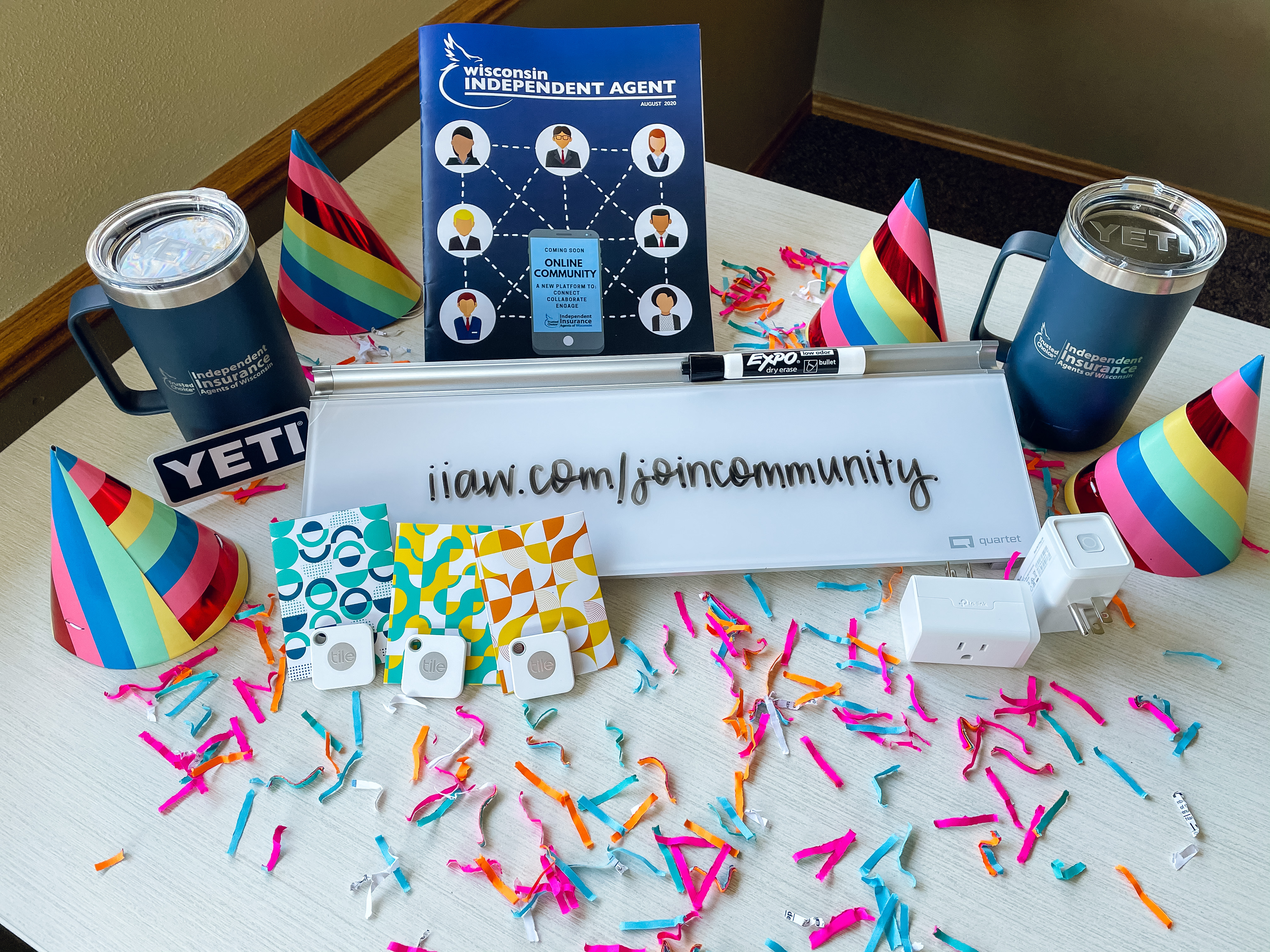
Participants are eligible to earn gift cards to local businesses of their choice, donations to local non-profit organizations of their choice as well as IIAW swag items (YETI beer mug, smart plugs, whiteboard deskmate – the good kind of swag!). While there is a lot going on in the world, this is an exciting place to get back to networking, building relationships and treating yourself to some free gifts. We look forward to connecting in the Online Community and “meeting” some new agency team members who have not been a part of the conversation in the past. Meet you there!
Tags:
insuring Wisconsin
online community
Risky Business
wisconsin independent insurance association
wisconsin insurance agency help
wisconsin insurance blog
Permalink
| Comments (0)
|
|
|
Posted By IIAW Staff,
Friday, November 6, 2020
|

By: WAHVE | Work At Home Vintage Experts This article was originally shared in our November 2020 Magazine. Read the full magazine here. Zoom fatigue. By now, you’ve not only heard of it – you’ve experienced it. Before the pandemic, those of us who worked from home were accustomed to conducting most of our meetings remotely. Now that remote meetings are the norm, it seems everyone is feeling
a little more burnt out than usual. Zoom meetings are causing fatigue because we have to make more emotional effort to appear and stay engaged during hour after hour of online meetings – followed by more Zooming with friends and family after work.
In the absence of non-verbal cues, we’re all straining a little harder to pay attention and maintain sustained eye contact all day long, which can be draining. There are a few things all of us can do to combat the fatigue – while still maintaining
Zoom etiquette.
To really up your game, adjust your camera to be at eye level so that other people aren’t looking up your nose or at the side of your face. Make sure you have good lighting so that you look less tired from all the extra hours you’re putting in now that
the workday never really ends. It’s also important to practice your presentation and how to share your screen before meetings so that you can avoid the embarrassment of everyone looking at the web page you still have up on your desktop called “DIY
squirrel picnic benches.” Following these tips can help combat the fatigue to some extent, because you’ll feel less stressed about how to present and how you look.
Beyond this, here are some important ways you can get the most out of Zoom without it getting the most out of you.
Limit video calls only to those that are necessary
Turning on your camera should be optional. Reserve your camera for important communications such as one-on-ones with your manager or leadership calls that require you to follow social cueing. Pick a few meetings each day where you can give your camera
– and you – a break. Just remember that turning off the camera doesn’t mean it’s time to multitask. We’ve all been on meetings when someone says “Sorry, I was on mute. Can you repeat that question?” or “I didn’t catch that last part – can you repeat
that?” If you’re multitasking, you probably don’t need to spend your time at the meeting – which leads us to the next tip.
Come prepared
Come to the meeting with an expectation about what you will need to be an effective participant. Back when we gathered physically, do you remember the people who wandered into the meeting but didn’t contribute or track to-dos? No paper, no pen, no notebook,
no PC.
Don’t be “that person” on a Zoom call, Anticipate the needs of the meeting and be prepared to share data, documents and to give input that helps the team make quick decisions. Too often now on Zoom calls, unprepared people are more than happy to kick
the can to the next meeting, or waste 12 minutes sharing their screen while you get a front row to their filing system as they look for the latest spreadsheet or report. If you have your ducks in a row ahead of time, the meeting should be more efficient,
and you may be able to end it early.
Track the meeting
Pull out a physical notepad and track the meeting using handwritten notes. The act of tracking forces the brain to stay in lockstep with the meeting, learn something of value, and provide guidance to others because you are practicing the loop of active
listening and recording. Think of how wonderful it will be when the meeting ends 8 minutes early because everyone stayed engaged and came to a quick consensus.
Share – but don’t overshare
Spending a few minutes during each meeting connecting with everyone is good Zoom etiquette, but there can be such a thing as too much sharing. The 15 minutes everyone spends “reconnecting” at the beginning of five Zoom meetings per day means that’s happening
20 times a week, and 80 times a month. We’re all craving connection, so consider setting aside regular time that’s specifically reserved for team members to connect and share as needed.
Know your speed keys
If you could get a minute back for every minute someone had to repeat the conversation that they had with themselves while inadvertently on mute, you’d only need 15 minutes to conduct a 30-minute meeting.
Memorize these shortcuts or have a sticky note on the side of your screen that lists the most used quick tasks:
Mute or unmute audio: Alt + A
Start or stop video: Alt + V
Start recording a meeting: Alt + R
Pause or resume screen recording: Alt + P
Pause or resume screen sharing: Alt + S
Being an effective Zoom participant means being an effective communicator. That means coming prepared, being an active listener, and practicing social awareness. It’s a new world we live in with everyone
on cameras and audio, but these few tips can boost your Zoom etiquette and improve how you feel during and after meetings.
Tags:
insuring Wisconsin
remote work
virtual meeting
wisconsin independent insurance association
wisconsin insurance agency
wisconsin insurance agency help
wisconsin insurance blog
zoom
Permalink
| Comments (0)
|
|

 Blog Home
 All Blogs
 RSS
RSS